The New Pricemaster Rule System: Total Control, Built for Real eCommerce Strategy
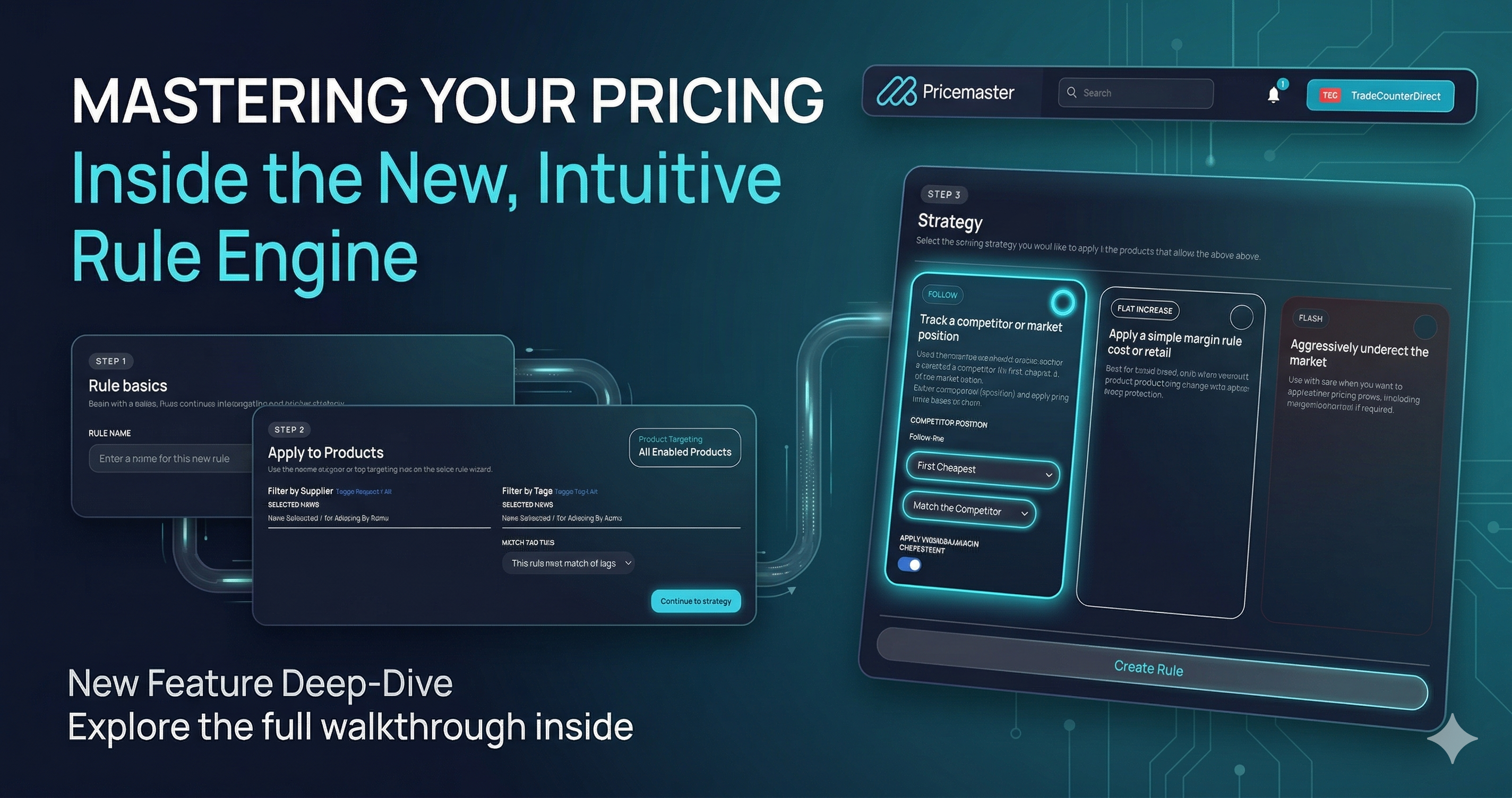
Pricing should not feel like guesswork or a constant manual battle. That is why we have completely redesigned the Pricemaster Market Rules system. The new interface gives retailers and brands more control, more flexibility, and more precision, all powered by real-time data and automation.
Whether you are managing hundreds or hundreds of thousands of SKUs, this is how you take control of your pricing strategy with a rule system built for how modern eCommerce actually works.
A Smarter Way to Build Pricing Rules
The new rule builder breaks everything down into a simple guided flow, so you can go from idea to live pricing strategy in minutes instead of trying to manage pricing manually across your catalogue.
Step 1: Name Your Rule Clearly
You now have unlimited rules, so structure matters. Giving every rule a clear and intentional name makes it far easier to scale your strategy over time.
- Nike T-Shirts - Match Market
- Weekend Flash Sale - Clearance Stock
When your catalogue grows, clear naming means faster edits, better oversight, and less risk of confusion across your team.
Step 2: Segment Your Catalogue with Precision
This is where Pricemaster becomes much more powerful than one-size-fits-all pricing tools. You are not applying one blanket rule across an entire catalogue. You are building targeted pricing strategies around how different product groups actually perform.
Filter by Supplier or Brand
Pull supplier and brand data directly from Shopify and other integrations. If you want to create a rule only for NikeSB, you can do that immediately.
Layer with Product Tags
Refine even further by using your own store tags, such as:
- Only T-shirts
- Only sale items
- Only seasonal stock
That means you can create a fully targeted rule for a precise product group like NikeSB + T-shirts rather than pricing all Nike products the same way.
Use Pricemaster Dynamic Tags
You can also layer in Pricemaster's dynamic data-led tags, including:
- Best Sellers
- Highest Margin
- Best Market Positioned
- Out of Pricing Targets
- Aged Stock
- Drop-shipped Products
This is where dynamic pricing becomes genuinely strategic. Instead of guessing, you can segment your catalogue based on live performance, market position, and commercial reality.
The result is simple: one rule no longer needs to fit your whole catalogue, because now it does not have to.
Step 3: Choose Your Strategy
Once the product group is defined, the next question is how you want to compete.
Market Positioning Rules
With follow rules, you can decide exactly where you want to sit in the market:
- Cheapest
- Second cheapest
- Third cheapest
- Above or below a specific competitor
You can also target named competitors and retailers with much tighter strategies:
- 5p cheaper than the Nike store
- Match a specific competitor
- Stay 5% above market
This gives you true competitive pricing intelligence powered by real-time market data and unlimited competitor tracking.
Strategic Flexibility
You are not locked into one pricing model. Pricemaster allows you to:
- Undercut by a fixed value such as £0.01
- Move above or below the market by percentage
- Stay premium while converting with promotions or discount code strategy
That flexibility is important because the best pricing strategy depends on the product, the category, and your commercial objective.
Flat Margin Rules
If your priority is profitability rather than market position, you can apply flat margin logic to a product group. For example, you can instruct the system to maintain a 40% margin across a targeted segment.
Pricemaster will then adjust prices automatically to hit those targets while still balancing competitiveness with built-in margin protection.
Flash Rules
Sometimes speed matters more than margin. Flash Rules are designed for those moments when you need to move quickly and aggressively.
- Override margin protection
- Drop below cost if required
- Take the cheapest position immediately
This is ideal for aged stock, end-of-line products, seasonal clearances, and short-term promotional activity. It is controlled aggression rather than uncontrolled discounting.
Step 4: Schedule, Automate, and Let It Run
Once the strategy is set, Pricemaster handles the execution. You can assign a start date, end date, and specific timing so rules launch and stop automatically.
That makes the system practical for:
- Weekend flash sales
- Black Friday campaigns
- Christmas promotions
- Short-term stock clearance windows
No manual switching, no late-night rule changes, and no missed opportunities. Just automated execution based on the plan you set.
Built for Scale and Designed for Profit
The new Pricemaster rule system is not just easier to use. It is built around the actual needs of scaling retailers and brands:
- Dynamic pricing powered by real-time market data
- Unlimited competitor tracking
- Advanced segmentation with supplier, brand, and product tags
- Margin protection built directly into the logic
- Automation that removes manual pricing effort
This is how you stop reacting to the market and start controlling it.
Why This Matters for eCommerce Stores and Brands
For eCommerce stores, the new rule system means faster reactions, more structured pricing strategies, and more confidence across large catalogues. For brands, it creates much stronger control over how products are positioned, promoted, and protected across different product groups.
If you want to see how this fits into broader pricing strategy, you can also explore the Pricemaster platform and our approach to dynamic pricing.
What Comes Next?
This is one side of the story. The next step is Sales Rules, where the focus shifts away from market positioning and toward finding the most profitable price points based on your own performance data.
If you want to see the new rule system in action, book a demo and we can walk you through how it works on your catalogue.
FAQs
What is the Pricemaster rule system?
The Pricemaster rule system is a dynamic pricing engine that allows you to create automated pricing strategies based on competitor data, product segmentation, and margin targets. It helps businesses control pricing at scale while staying competitive and protecting profitability.
How does Pricemaster segment products for pricing rules?
Pricemaster uses supplier data, product tags, and dynamic tagging to segment your catalogue. That lets you build highly targeted rules for specific brands, product groups, stock conditions, or performance categories.
Can I track competitors and price against them?
Yes. Pricemaster allows you to track unlimited competitors and position your pricing exactly where you want in the market, whether that is cheapest, second cheapest, or relative to a specific retailer.
What is margin protection and how does it work?
Margin protection ensures your prices do not fall below a predefined profit threshold. Even when you apply aggressive market strategies, Pricemaster can protect your baseline profitability automatically.
What are flash rules in Pricemaster?
Flash rules are short-term, aggressive pricing strategies that can override margin protection to help clear stock quickly. They are ideal for aged inventory, end-of-line products, and time-limited promotional events.
Can I schedule pricing rules in advance?
Yes. Pricemaster includes a rule scheduler so you can automate pricing strategies around specific dates and times for campaigns such as weekend sales, Black Friday, or seasonal promotions.
How does Pricemaster help increase profitability?
Pricemaster combines real-time competitor data, dynamic pricing logic, and margin protection so your prices stay optimised. That helps you make profitable pricing decisions at scale instead of reacting manually.
Is Pricemaster suitable for large product catalogues?
Absolutely. Pricemaster is built for scale and can manage pricing across thousands or even millions of products using automation, segmentation, and unlimited rule creation.
What is the difference between market rules and sales rules?
Market rules focus on positioning your products against competitors in real time. Sales rules focus on optimising pricing against your own performance data so you can find the most profitable price points regardless of the market.